
Railing Options Compared
| Railing Type | Cost/linear ft | 60 ft Total | Maintenance | Look | HOA Friendly |
|---|---|---|---|---|---|
| Pressure-treated wood | $20–$35 | $1,200–$2,100 | Stain every 1-2 yrs | Traditional | Yes |
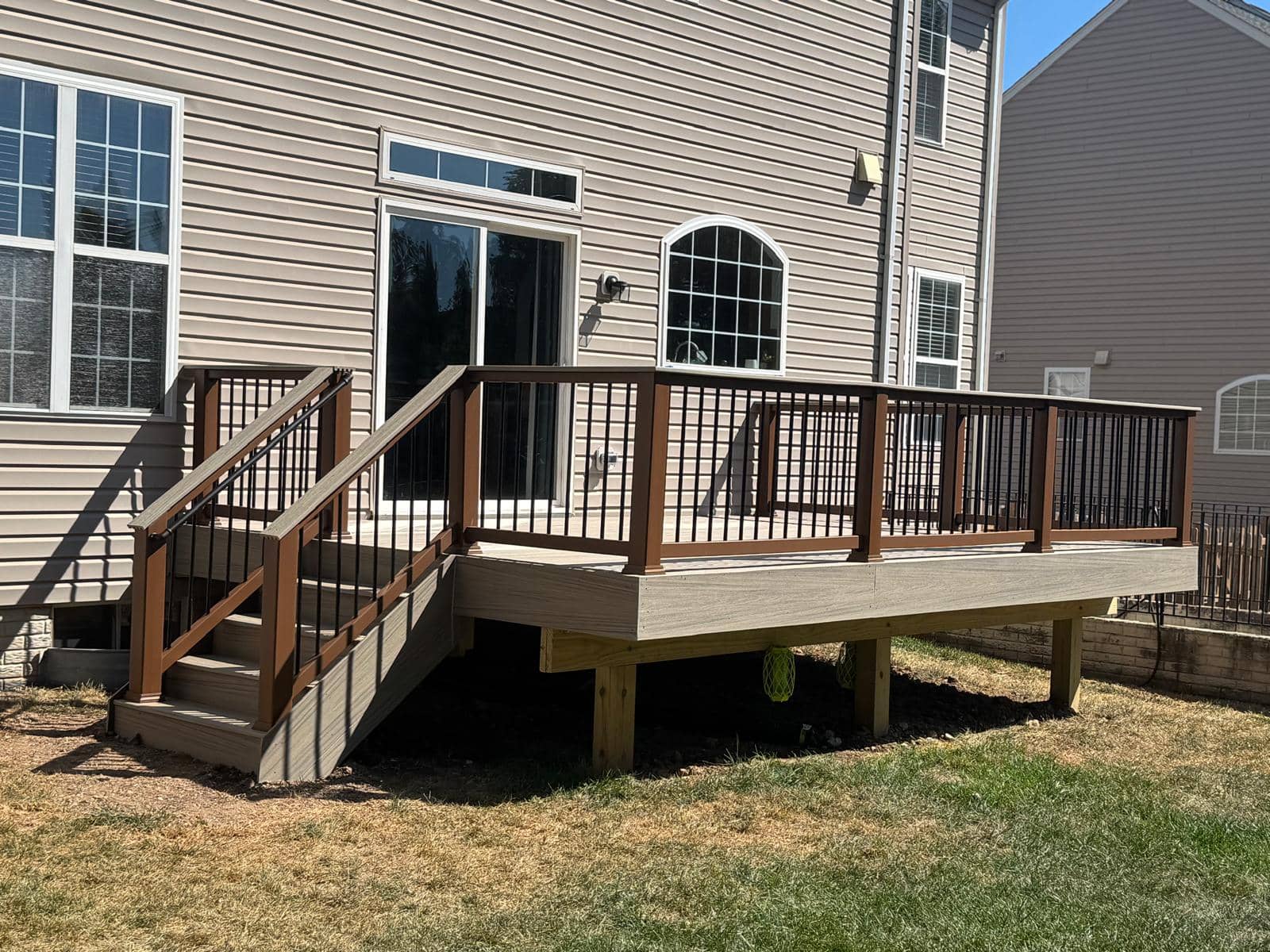
| Composite (Trex/TimberTech) | $40–$70 | $2,400–$4,200 | None | Modern/traditional | Yes most popular |
| Aluminum | $35–$60 | $2,100–$3,600 | None | Clean, modern | Yes |
| Cable rail | $60–$100 | $3,600–$6,000 | Re-tension yearly | Modern, open view | Some restrict |
| Glass panel | $80–$150 | $4,800–$9,000 | Clean glass 2x/yr | Contemporary, unobstructed | Some restrict |
| Wrought iron | $50–$80 | $3,000–$4,800 | Paint every 3-5 yrs | Classic, ornate | Yes |
Our Top Picks
Best Overall
Trex Signature Aluminum
Slim profile, matches Trex decking perfectly, 25-yr warranty, zero maintenance. Available in Charcoal Black and Bronze.
Best Value
Trex Select Composite
Same durability as Signature at 30% lower cost. Great if you want railing to match your composite deck boards.
Best View
Cable Railing (Feeney/CableRail)
Maximizes view for hillside and elevated decks. Horizontal cables nearly invisible from 10+ feet. Premium look.
Best Premium
Glass Panel (aluminum frame)
Completely unobstructed view, windbreak effect, modern aesthetic. Best for second-story decks and pool surrounds.
Virginia Building Code Requirements
- Railing required: On any deck surface 30 inches or more above grade
- Minimum height: 36 inches (some Fairfax County areas require 42 inches for decks over 30" above grade)
- Baluster spacing: Maximum 4 inches apart (the "4-inch sphere rule" no child's head can pass through)
- Load rating: Must withstand 200 lbs of concentrated force at the top rail
- Graspable handrail: Required on all stairs 1.25" to 2" diameter, continuous. For tread, riser, stringer, and landing planning, start with the Virginia deck stair calculator, then see our deck stair construction diagram; for rise, run, handrail height, and guard requirements, see the Virginia deck stair code guide.
- Cable rail: Maximum 3" spacing between cables, must pass 200-lb load test
HOA note: Many Northern Virginia HOAs have additional restrictions beyond building code specific railing profiles, colors, or style requirements. We check your HOA guidelines before recommending a railing system. Read our HOA guide.
On attached decks, railing and stair safety also depends on the structural connection at the house. Homeowners comparing repair or rebuild options should understand ledger board flashing and deck attachment, check the deck stair safety checklist, and review common stair inspection failures before approving a scope.
Choosing the Right Railing for Your Deck
For a view deck (elevated, scenic lot)
Cable rail or glass panels. Both maximize the view and create a modern, open feeling. Cable is more affordable; glass blocks wind.
For a traditional home
Composite or aluminum railings in white, bronze, or black. Match the home's trim color. Trex Signature in Charcoal Black is our most-specified option for colonial and transitional homes.
For a pool surround
Glass panels (meet most pool barrier codes) or aluminum with self-closing gates. Check your county's pool fence requirements they're separate from deck railing codes.
For budget-conscious builds
Aluminum railings offer the best value for a modern, maintenance-free look. $35–$60/linear ft is significantly less than cable or glass, with zero upkeep.
Frequently Asked Questions
What's the most popular railing in Northern Virginia?
Composite (Trex Signature/TimberTech) matches decking, zero maintenance, HOA-friendly. Aluminum is second for modern looks.
How much do railings cost?
Wood: $20-$35/ft. Composite: $40-$70/ft. Aluminum: $35-$60/ft. Cable: $60-$100/ft. Glass: $80-$150/ft. Typical 60ft deck: $2,000-$9,000.
What's the code for deck railings in Virginia?
Required if 30"+ above grade. Min height 36" (42" in some areas). Baluster spacing max 4". Must withstand 200 lbs.
Are cable railings HOA-approved?
They meet building code if properly spaced, but some HOAs restrict them. We check your guidelines first.
Related Guides
- Trex Railing Installation →
- Railings + Stairs + Lighting Add-On Cost Guide →
- Deck Stair Safety Checklist PDF →
- Common Deck Stair Inspection Failures →
- Deck Stair Construction Diagram →
- Virginia Deck Stair Code Guide →
- Ledger Board Flashing and Deck Attachment →
- How Much Does a Deck Cost? →
- Trex vs TimberTech vs AZEK →
- Deck Lighting Ideas →
- HOA Deck Rules →
- Loudoun Decks Reviews (Google reviews) →
- Free Deck Cost Calculator →