

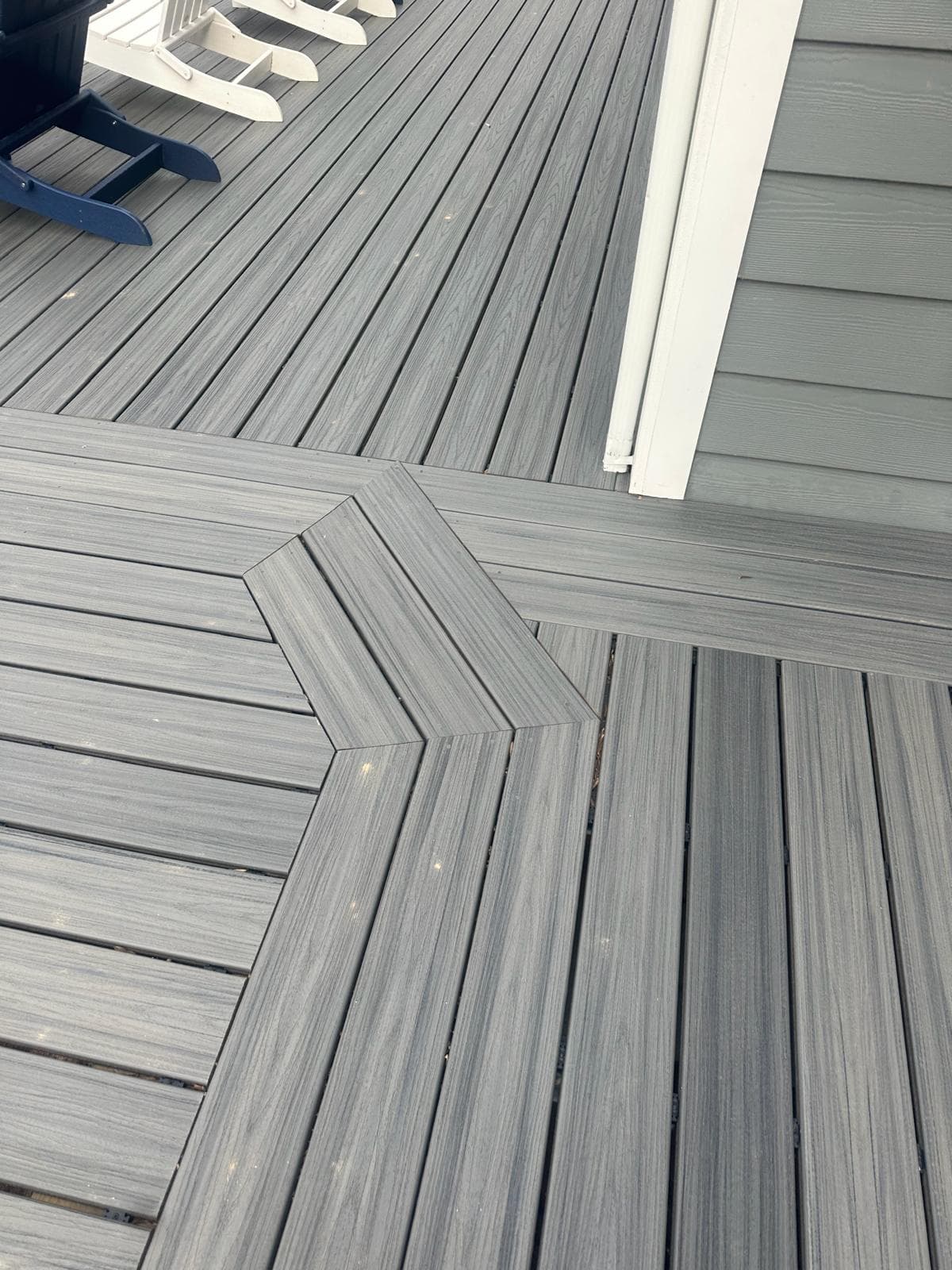
Most “best deck stain” lists are written for national audiences. That's a problem if you live in Virginia, because our climate is uniquely punishing to deck finishes. We get scorching UV in summer (Zone 7 sun exposure), humidity that regularly exceeds 70%, over 40 inches of annual rainfall, and 60+ freeze-thaw cycles per winter in Northern Virginia. A stain that performs beautifully in Arizona or Minnesota may fail catastrophically here.
This guide is based on products we've applied on hundreds of decks across Loudoun, Fairfax, and Prince William counties since 2018. Every recommendation below has been tested in Virginia's actual conditions — not a lab.
Top 10 Deck Stains & Sealers for Virginia (2026)
Here are the products we recommend and use, ranked by overall performance in Virginia's climate:
| Product | Type | Base | Coverage | Durability | Price/Gal | Best For |
|---|---|---|---|---|---|---|
| TWP 1500 | Semi-Trans | Water | 200-300 sqft | 2-3 yrs | $45-$55 | Overall best for Virginia |
| Defy Extreme | Semi-Trans | Water | 150-250 sqft | 2-3 yrs | $40-$50 | Best UV protection |
| Benjamin Moore Arborcoat | Solid | Water | 250-350 sqft | 4-6 yrs | $55-$65 | Older/weathered wood |
| Cabot Australian Timber Oil | Semi-Trans | Oil | 200-400 sqft | 2-3 yrs | $38-$48 | Hardwood decks (ipe, mahogany) |
| Ready Seal | Semi-Trans | Oil | 150-250 sqft | 2-3 yrs | $35-$42 | Easiest DIY application |
| DEFY Epoxy Fortified | Semi-Trans | Water | 150-250 sqft | 3-4 yrs | $50-$58 | High-traffic decks |
| Sherwin-Williams SuperDeck | Semi-Trans | Water | 200-300 sqft | 2-3 yrs | $42-$52 | Wide color selection |
| Thompson's WaterSeal Signature | Semi-Trans | Water | 200-300 sqft | 2-3 yrs | $30-$38 | Budget-friendly option |
| Penofin Blue Label | Transparent | Oil | 300-500 sqft | 1-2 yrs | $48-$58 | Natural cedar look |
| Olympic Elite | Semi-Trans | Water | 200-250 sqft | 2-3 yrs | $38-$45 | Pressure-treated pine |
Coverage varies with wood porosity and application method. Prices reflect 2026 retail at Northern Virginia home centers.
Oil-Based vs Water-Based Deck Stain
This is the most common question we hear. In Virginia, we lean heavily toward water-based for most applications — but oil-based still has its place.
| Factor | Oil-Based | Water-Based |
|---|---|---|
| Penetration depth | Deeper — soaks into wood fibers | Moderate — bonds to surface and top fibers |
| Dry time | 24-48 hours | 4-6 hours |
| Humidity tolerance | Poor — fails above 50% humidity | Good — applies up to 65% humidity |
| Mildew resistance | Low — oils feed mildew in humid climates | High — synthetic resins resist mildew |
| UV protection | Moderate | High (with nano-zinc additives) |
| VOC levels | High (350-550 g/L) | Low (50-250 g/L) |
| Virginia regulation | Some formulas restricted | Fully compliant |
| Application forgiveness | Very forgiving — self-levels | Less forgiving — shows lap marks |
| Cleanup | Mineral spirits required | Soap and water |
| Best Virginia use case | Hardwood decks, fall application only | All wood types, spring and fall |
Our recommendation: Use water-based for 90% of Virginia deck projects. Reserve oil-based (like Cabot Australian Timber Oil) for hardwood decks (ipe, cumaru, mahogany) applied during dry October weather when humidity drops below 50%.
Transparent vs Semi-Transparent vs Solid Stain
The opacity level you choose determines how much wood grain shows through and how long the finish lasts. Here's how each performs in Virginia:
Transparent
Lasts: 1-2 years
Pros: Shows full wood grain, natural look
Cons: Minimal UV protection, frequent recoating
Best for: New cedar or redwood decks where you want maximum grain visibility
Semi-Transparent
Lasts: 2-3 years
Pros: Best balance of protection and grain visibility
Cons: Shows some wear patterns in high-traffic areas
Best for: Most Virginia decks — pressure-treated pine, cedar, and older wood
Solid
Lasts: 4-6 years
Pros: Maximum UV and moisture protection, hides imperfections
Cons: Hides wood grain, can peel if not prepped properly
Best for: Older weathered decks, wood with significant damage or discoloration
For most Northern Virginia homeowners with pressure-treated pine decks, semi-transparent is the sweet spot. It adds color depth, provides solid UV protection, and allows the wood grain to show through — which is exactly what most people want.
Why Virginia's Climate Destroys Deck Finishes
Understanding what your deck stain is up against helps explain why some products fail in Virginia while performing fine elsewhere:
Humidity (June-September)
Virginia's average summer humidity exceeds 70%, with dew points regularly in the upper 60s and low 70s. This creates two problems: stain can't dry properly during application, and trapped moisture beneath the finish causes blistering and peeling. This is why oil-based stains — which need 24+ hours of dry conditions — are risky summer products in our market.
UV Exposure
Northern Virginia receives 4.5–5.0 peak sun hours per day during summer. South-facing decks take the worst beating — we've seen transparent sealers fail in as little as 8 months on full-sun exposures. Stains with nano-zinc oxide (like Defy Extreme) provide significantly better UV blocking than standard pigment-only formulas.
Freeze-Thaw Cycles
Northern Virginia experiences 60–80 freeze-thaw cycles per winter. Water penetrates wood fibers, freezes, expands, and cracks the finish from underneath. This is why penetrating stains (that soak into the wood) outperform film-forming stains (that sit on top) in our climate — there's no surface film to crack.
Rainfall
Virginia averages 42–44 inches of rain annually, well above the national average of 30 inches. Combined with spring pollen accumulation and fall leaf coverage, moisture sits on deck surfaces for extended periods. Products with strong mildew inhibitors are essential — Thompson's original WaterSeal (without mildewcide) is a common failure we see on Virginia decks.
How to Apply Deck Stain: Step-by-Step
Whether you DIY or hire a professional, proper preparation is 80% of a successful stain job. Here's the process we follow:
Step 1: Pressure Wash (Day 1)
Pressure wash at 1,200–1,500 PSI with a 25-degree fan tip. Stay 6–8 inches from the surface. For grayed or mildewed wood, apply a deck cleaner/brightener first. Never exceed 2,000 PSI on softwood — you'll shred the fibers and the stain will absorb unevenly.
Step 2: Dry Time (Days 2-3)
Allow 48 hours minimum for the wood to dry after washing. In Virginia's humid months, 72 hours is safer. The wood should feel dry to the touch and pass the water droplet test — a sprinkled drop should absorb within 10 seconds, not bead up.
Step 3: Sand if Needed (Day 3)
If the wood has raised fibers from pressure washing (common), lightly sand with 80-grit sandpaper. This step is often skipped by DIYers and cheap contractors, but it makes a visible difference in the final finish smoothness.
Step 4: Apply First Coat (Day 3-4)
Apply stain with a pump sprayer and immediately back-brush with a quality stain brush or stain pad. Work in manageable sections (2–3 boards at a time) to avoid lap marks. Apply in the direction of the wood grain. Start with railings and verticals, then do the deck surface last.
Step 5: Second Coat (Day 4-5)
Most semi-transparent stains benefit from a second coat applied wet-on-wet (within 30–60 minutes of the first) or after the manufacturer's recommended recoat time. Two thin coats always outperform one thick coat — thick application is the number one cause of peeling.
Best Time to Stain a Deck in Virginia
Timing is critical in Virginia. Here's our seasonal breakdown:
| Season | Months | Rating | Notes |
|---|---|---|---|
| Early Spring | Late March-May | Excellent | Ideal temperatures (55-80°F), moderate humidity, long dry stretches |
| Late Spring | June | Good | Humidity rising but still manageable; watch for thunderstorms |
| Summer | July-August | Poor | Humidity 70%+, temps above 90°F cause flash-drying, frequent afternoon storms |
| Early Fall | September-October | Excellent | Best window — low humidity, warm days, cool nights, minimal pollen |
| Late Fall | November | Fair | Temps dropping below 50°F; many stains won't cure properly |
| Winter | December-February | Not Recommended | Below curing temp for all stain products |
Our top recommendation: Book your deck staining project for late September or early October. You get the best weather conditions, contractors are less booked than spring, and your deck is protected heading into winter.
Professional Staining vs DIY: Cost Comparison
Should you stain your deck yourself or hire a pro? Here's the honest breakdown for a typical 300 sqft deck in Northern Virginia:
| Cost Component | DIY | Professional |
|---|---|---|
| Stain (2 gallons) | $70-$130 | Included |
| Pressure washer rental | $75-$100/day | Included |
| Deck cleaner/brightener | $20-$40 | Included |
| Brushes, rollers, tape | $30-$50 | Included |
| Sander rental + sandpaper | $40-$60 | Included |
| Labor | $0 (your time: 12-16 hrs) | $400-$900 |
| Total (300 sqft) | $235-$380 | $600-$1,500 |
| Cost per sqft | $0.75-$1.25 | $2.00-$5.00 |
When to DIY: If your deck is in good condition, ground-level, under 300 sqft, and you have a free weekend during the right season. When to hire a pro: Elevated decks (safety), decks over 400 sqft (time), and any deck that needs repair work before staining. A professional also guarantees even application — uneven stain is the most visible DIY mistake.
5 Deck Staining Mistakes That Ruin Virginia Decks
1. Staining in High Humidity
Applying stain when humidity exceeds 65% prevents proper curing. The finish stays tacky, attracts dirt, and peels within months. Check the dew point, not just the humidity percentage — a dew point above 65°F means conditions are too wet for most stains.
2. Skipping the Prep
Pressure washing without a deck cleaner/brightener leaves behind oxidized wood fibers that prevent stain penetration. Brightener (oxalic acid based) opens the wood pores and restores pH balance. Skipping this step is why many DIY stain jobs look blotchy.
3. Applying Too Thick
More stain does not equal more protection. Thick application creates a surface film that traps moisture underneath, leading to blistering and peeling — especially in Virginia's humid climate. Two thin coats always beat one heavy coat.
4. Using the Wrong Product on Pressure-Treated Wood
Modern pressure-treated lumber uses micronized copper azole (MCA), which can react with certain oil-based stains. Always verify that your stain is compatible with MCA-treated wood. Water-based stains are universally compatible.
5. Ignoring Maintenance Between Stainings
Annual cleaning with a garden hose and deck brush extends stain life by 30–50%. Leaves, pollen, and dirt trap moisture against the finish and accelerate breakdown. A 20-minute sweep and rinse in spring saves you hundreds in premature re-staining costs.
Frequently Asked Questions
What is the best deck stain for Virginia weather?
For most Virginia decks, a semi-transparent water-based stain like TWP 1500 or Defy Extreme offers the best balance of UV protection, moisture resistance, and natural wood appearance.
How often should you stain a deck in Virginia?
Every 2-3 years with semi-transparent stain, or 3-5 years with solid stain. South-facing full-sun decks may need re-staining every 18-24 months.
Is oil-based or water-based deck stain better for Virginia?
Water-based is better for 90% of Virginia applications. It handles humidity, dries faster, and resists mildew. Use oil-based only on hardwood decks during dry fall weather.
When is the best time to stain a deck in Virginia?
April-May and September-October are ideal. Temperatures 50-85°F, humidity below 50%, and 48 hours of dry weather are the key requirements.
How much does professional deck staining cost in Northern Virginia?
Professional deck staining costs $2-$5 per square foot including prep, pressure washing, and two coats. A typical 300 sqft deck runs $600-$1,500.
Should I stain or seal my new pressure-treated deck?
Wait 3-6 months for the wood to dry and chemicals to cure. Perform a water droplet test — if water beads, the wood isn't ready. You can apply a water repellent sealer immediately, but stain should wait.