

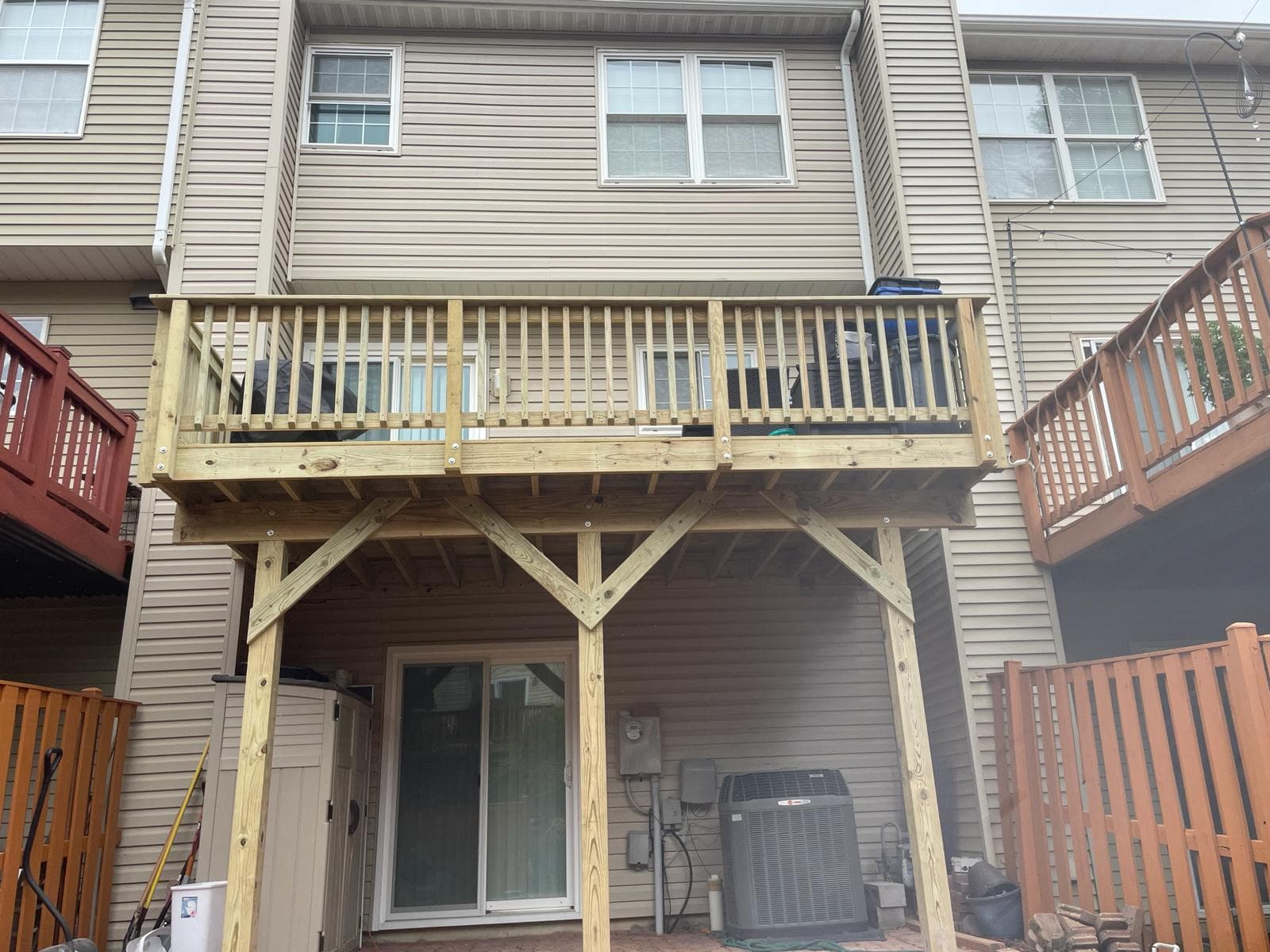
Every homeowner considering a new deck asks the same question: “Will I get my money back?” The answer in Northern Virginia is more favorable than almost anywhere else in the country. The DC metro area's high home values, strong buyer demand for outdoor living space, and relatively mild three-season climate create a market where decks deliver outsized returns.
But ROI isn't uniform. The material you choose, the size you build, the features you include, and even the county you live in all affect how much value your deck adds at resale. This guide presents real data from Northern Virginia real estate transactions, Remodeling Magazine's annual Cost vs. Value report, and our own experience working with homeowners who have sold properties with decks we built.
Whether you're building a deck primarily for enjoyment (most people) or with an eye toward resale (increasingly common in this market), understanding ROI helps you make smarter decisions about materials, scope, and budget.
Deck ROI by Material Type
The material you choose has the single biggest impact on ROI. Buyers perceive composite and PVC decking as premium, low-maintenance assets. Wood decking — unless it's recently stained and in excellent condition — is discounted because buyers mentally add future maintenance costs.
| Material | Typical Cost (300 sqft) | ROI % at Resale | Value Added | Buyer Perception |
|---|---|---|---|---|
| Pressure-Treated Wood | $8,000–$12,000 | 50–60% | $4,000–$7,200 | Basic — needs work |
| Cedar | $12,000–$18,000 | 55–65% | $6,600–$11,700 | Nice but aging |
| Trex Enhance | $15,000–$22,000 | 65–75% | $9,750–$16,500 | Good composite |
| Trex Transcend | $22,000–$30,000 | 70–80% | $15,400–$24,000 | Premium — move-in ready |
| TimberTech AZEK | $28,000–$38,000 | 65–75% | $18,200–$28,500 | Luxury — impressive |
| Trex Lineage | $25,000–$35,000 | 70–80% | $17,500–$28,000 | Top tier — wow factor |
ROI ranges based on Remodeling Magazine Cost vs. Value 2025-2026, adjusted for Northern Virginia metro area premiums. Actual returns vary by property, condition, and market conditions at time of sale.
ROI by Project Type
Not all outdoor projects deliver the same return. Here is how different project types compare in the Northern Virginia market:
| Project Type | Typical Investment | ROI % | Value Added | Best For |
|---|---|---|---|---|
| Basic Composite Deck | $18,000–$28,000 | 70–80% | $12,600–$22,400 | Best ROI per dollar |
| Multi-Level Deck | $35,000–$55,000 | 65–75% | $22,750–$41,250 | Larger homes |
| Screened Porch | $40,000–$80,000 | 60–75% | $24,000–$60,000 | Year-round use |
| Outdoor Kitchen + Deck | $50,000–$90,000 | 55–70% | $27,500–$63,000 | Entertainers |
| Deck + Patio Combo | $30,000–$50,000 | 65–75% | $19,500–$37,500 | Balanced approach |
| Deck Resurfacing | $12,000–$20,000 | 75–85% | $9,000–$17,000 | Highest ROI % |
Key insight: Deck resurfacing delivers the highest percentage ROI because the investment is lower while the visual transformation is dramatic. If you have a structurally sound deck with aging wood boards, resurfacing with composite is the smartest financial play.
Why Northern Virginia Deck ROI Exceeds the National Average
The national average deck ROI is 50–65%. Northern Virginia consistently delivers 65–80%. Several factors drive this premium:
Higher Home Values Create Higher Expectations
The median home price in Loudoun County is approximately $680,000; Fairfax County exceeds $700,000. At these price points, buyers expect finished outdoor living spaces. A home without a deck or with a deteriorating wood deck is perceived as incomplete — and priced accordingly. In communities like Brambleton, Broadlands, and One Loudoun, a quality deck isn't a luxury; it's a baseline expectation.
Three-Season Climate Maximizes Usage
Northern Virginia's climate allows outdoor living from April through November — roughly 7–8 months of the year. This extended use period makes outdoor space more valuable per square foot than in markets with shorter outdoor seasons. Buyers factor this into their willingness to pay.
Competitive Buyer Market
Even with recent rate adjustments, the DC metro housing market remains competitive. Homes with move-in-ready outdoor spaces sell faster and receive stronger offers. Multiple agents we work with confirm that a well-built deck is one of the top three exterior features that drive buyer decisions, alongside curb appeal and garage/parking.
Remote Work Has Increased Outdoor Space Value
The post-2020 shift to remote and hybrid work — particularly prevalent among NoVA's government contractor and tech workforce — has permanently increased demand for functional outdoor spaces. Home offices need a complement, and decks serve as the “outdoor room” that remote workers use for breaks, calls, and mental health throughout the workday.
Deck ROI by County: Loudoun vs. Fairfax vs. Prince William
ROI varies meaningfully across Northern Virginia's counties. Here is our data-backed comparison:
| County | Median Home Value | Avg Deck Investment | Typical ROI | Value Added | Notes |
|---|---|---|---|---|---|
| Loudoun County | $680,000 | $30,000–$45,000 | 72–80% | $21,600–$36,000 | Highest ROI — strong buyer demand |
| Fairfax County | $710,000 | $32,000–$50,000 | 70–80% | $22,400–$40,000 | Premium markets (McLean, Great Falls) push higher |
| Prince William County | $520,000 | $22,000–$35,000 | 60–72% | $13,200–$25,200 | Good ROI — value-conscious buyers |
| Arlington County | $750,000 | $28,000–$42,000 | 65–75% | $18,200–$31,500 | Smaller lots limit deck size |
| Stafford County | $450,000 | $18,000–$30,000 | 55–68% | $9,900–$20,400 | Growing market — ROI rising |
Pattern: Higher home values correlate with higher deck ROI. In markets where the median home exceeds $600,000, buyers actively seek and pay for outdoor living features. Below that threshold, decks still add value but the percentage return decreases.
What Northern Virginia Real Estate Agents Say
We regularly work alongside real estate agents who list homes with decks we've built. Here is what they consistently tell us buyers look for:
- Composite over wood, always. Agents report that composite decks photograph better in listings and generate more showing requests. Buyers associate composite with “newer” and “maintenance-free.”
- Railings matter more than you think. Clean, modern railings (especially cable or composite) signal quality. Rusty metal or wobbly wood railings signal deferred maintenance, even if the deck surface is fine.
- Lighting sells evenings. Decks with integrated LED lighting photograph dramatically at twilight — and twilight photos are increasingly used as the primary listing image for homes with outdoor spaces.
- Size matters, but not infinitely. The sweet spot is 300–500 square feet. Beyond 500 sqft, the ROI per additional square foot decreases because the law of diminishing returns kicks in.
- Permits are non-negotiable. Agents universally confirm that unpermitted decks are deal-killers or require significant price concessions. Buyers' inspectors catch these every time.
When a Deck Does NOT Add Value
Not every deck increases home value. Here are the scenarios where a deck can actually hurt your resale position:
Cheap Materials That Look Cheap
A bare pressure-treated deck with no stain, basic wood railings, and visible hardware communicates “budget project.” Buyers in communities like Brambleton or Broadlands expect composite or better. A cheap deck on a $600K+ home actually lowers the perceived property quality.
No Building Permit
An unpermitted deck triggers major red flags during inspection. Buyers may demand removal, expensive retroactive permitting, or a $10,000–$20,000 price reduction. In some cases, unpermitted structures have killed deals entirely. Always build with permits — see our Loudoun County permit guide.
Poor Condition and Deferred Maintenance
A wood deck that hasn't been stained in five years, has visible rot, or wobbles when walked on subtracts value. Buyers calculate the cost to repair or replace — and their estimate is always higher than reality. If you're selling within two years and have a deteriorating wood deck, either resurface it with composite or demolish it and sell the yard as a blank canvas.
Over-Improving for the Neighborhood
A $75,000 multi-level deck with outdoor kitchen on a $400,000 townhome in Manassas will not recoup proportionally. The deck exceeds what comparable homes offer, and buyers aren't willing to pay the premium. Match your deck investment to your home's value bracket — generally 5–10% of home value is the sweet spot.
The Investment Sweet Spot: $25K–$45K
After analyzing hundreds of projects and their impact on resale, we've identified a clear investment sweet spot for Northern Virginia homeowners:
The Sweet Spot Formula
- Investment: $25,000–$45,000
- Material: Trex Transcend or TimberTech Pro (mid-premium composite)
- Size: 300–450 square feet
- Features: Quality railing + one staircase + optional lighting
- Expected ROI: 70–80% at resale
- Value added: $17,500–$36,000
- Net enjoyment cost: $5,000–$9,000 over years of use before selling
Think of it this way: a $35,000 deck that adds $26,000 in resale value costs you only $9,000 in “net enjoyment cost” — the price of years of outdoor living, entertaining, and daily quality of life. For most homeowners, that math works regardless of when they plan to sell.
7 Ways to Maximize Your Deck's ROI
1. Choose Mid-Premium Composite
Trex Transcend and TimberTech Pro hit the sweet spot: premium enough to impress buyers, not so expensive that you over-invest. Enhance-tier composites work well for value-conscious builds; AZEK-tier is best when the home itself justifies luxury.
2. Build with Permits
This is non-negotiable for ROI. Permitted decks with passing inspection records are verified assets. Unpermitted decks are liabilities. We handle 100% of the permitting process.
3. Add Lighting
A $2,000–$4,000 LED lighting package disproportionately increases perceived value because it transforms the deck into an evening destination and photographs beautifully for listings.
4. Invest in Quality Railings
Railings are the most visible element from ground level. Clean composite or cable railings signal quality to buyers walking the yard during a showing. Budget aluminum railings are fine; rusty or wobbly wood railings are not.
5. Keep It Proportional
Match deck investment to home value. The 5–10% rule works well: on a $600,000 home, invest $30,000–$60,000. On a $400,000 home, invest $20,000–$40,000.
6. Maintain Before Selling
If you're selling within a year, clean the deck professionally, tighten any loose railings, and replace any damaged boards. A $500 cleaning and tune-up can protect $20,000+ in perceived value.
7. Document Everything for the Buyer
Provide the buyer with the permit approval, warranty certificates (Trex, TimberTech, and AZEK warranties are all transferable), maintenance records, and your installer's information. This package communicates professionalism and protects the value narrative.
When Do You “Break Even” on a Deck?
ROI at resale is one metric. But a deck also delivers daily value through use. Here is how to think about the financial timeline:
- Year 0: You invest $35,000 in a Trex Transcend deck.
- Years 1–5: You enjoy the deck daily, host gatherings, increase your living space by 350 sqft. Zero maintenance cost.
- Year 5: If you sell, the deck adds ~$26,000 to home value. Net enjoyment cost: $9,000 for 5 years of use = $150/month.
- Year 10: Still looks great, zero maintenance. A comparable wood deck would have cost $3,000–$5,000 in staining and repairs by now.
- Year 15: Composite deck still performing. Wood deck would need replacement ($10,000+). Composite has saved you money overall.
- Year 25: Warranty still active. The deck has delivered 25 years of use for a net cost that's actually less than what you would have spent maintaining wood.
For a detailed cost comparison over time, see our composite deck cost guide and full deck pricing guide.
Frequently Asked Questions
How much value does a deck add to a home in Northern Virginia?
A composite deck recoups 65-80% of its cost at resale. A $35,000 Trex Transcend deck typically adds $22,750-$28,000 to your home's market value. This exceeds the national average of 50-65% due to NoVA's high home values and buyer demand for outdoor space.
What type of deck gives the best ROI?
A mid-range composite deck (Trex Transcend or TimberTech Pro) in the $25,000-$45,000 range delivers the best ROI at 70-80%. Deck resurfacing delivers the highest percentage return (75-85%) because the investment is lower.
Does a screened porch have better ROI than a deck?
Screened porches recoup 60-75% while open decks recoup 65-80%. However, screened porches cost more ($40K-$80K+), so absolute value added can be higher. The best ROI per dollar is an open composite deck.
Does deck ROI vary by county?
Yes. Loudoun and Fairfax counties see 70-80% ROI due to higher home values. Prince William averages 60-72%. Higher-value markets deliver better deck ROI because outdoor living is a stronger differentiator for buyers.
Does a deck without a permit affect home value?
Significantly. Unpermitted decks are flagged during inspection and can reduce value by $5,000-$15,000+. Buyers may demand removal or retrofitting. In competitive NoVA markets, unpermitted structures kill deals.
What is the ROI sweet spot for deck investment?
$25,000-$45,000 in composite decking delivers the highest percentage return (70-80%). This meets buyer expectations without over-improving. Match your investment to 5-10% of your home's value.